How St Albans was built
A small township from 1887
The township was subdivided in 1887 by the Cosmopolitan Land and Banking Company and stayed small: about 700 people lived there by 1940.
Post-war growth
In the 1950s the population rose from about 900 to 7,000, with many Yugoslav, Maltese and Italian families arriving.
Half houses, then brick veneer
By the 1960s the skillion 'half houses' were disappearing as families completed their homes, and owner-built timber gave way to brick-veneer estates.
Mostly detached houses
At the 2021 Census, 74.5% of occupied dwellings were separate houses and 15.9% semi-detached or townhouses.
Clay plains underfoot
St Albans sits on the Keilor Plains, whose soils eMelbourne describes as cracking clay.
Where staged houses leak
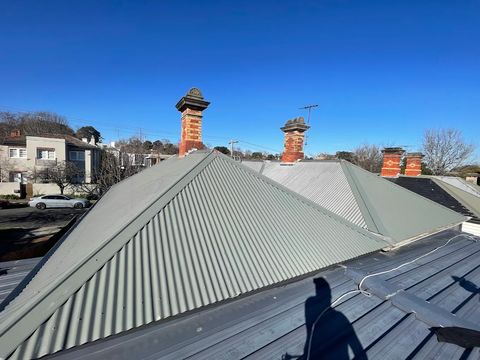
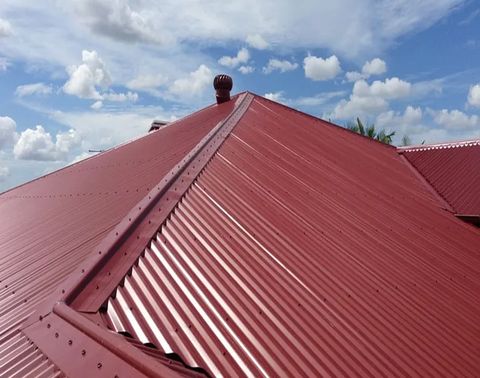
A half house usually began as a skillion (a single sloping roof), with the main house added later. Where a newer roof meets an older one, the flashing (the metal strip sealing the join) does all the work. If it went on in a hurry decades ago, it's often the first thing to let water in.
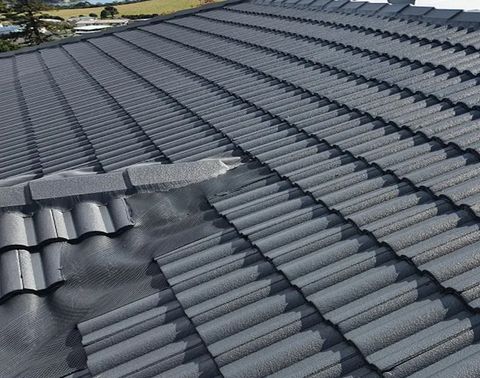
On brick veneer houses from the estates, the usual jobs are cracked tiles, ridge mortar and valley irons. Our page on roof repairs in Melbourne covers the common fixes, and flashing and valley repairs goes deeper on joins.
If cracks are showing up in walls as well as the roof, mention it to whoever comes out. On clay soils, a builder may want to look at the footings, not just the tiles.
Questions worth asking
- Where are the joins between older and newer parts of the roof, and are they sound?
- Is the original skillion section pitched steeply enough for its roofing?
- Would it make sense to re-roof the old section so it matches the rest?
- Could any of the older sheeting be asbestos cement?
Our take
On a house that grew in stages, we'd ask the roofer to start at the joins and flashings rather than the middle of the roof. If the oldest section causes trouble every winter, re-roofing just that part can make more sense than another patch. Tell us the job and your postcode and we'll pass it to one licence-checked local roofer where we have one. Where we don't, we'll tell you.
Want a roofer to take a look?
Tell us the job and your postcode. We match it with a Find My Roofer certified roofer who specialises in that kind of work, and they call you to quote. Your number goes to them alone.