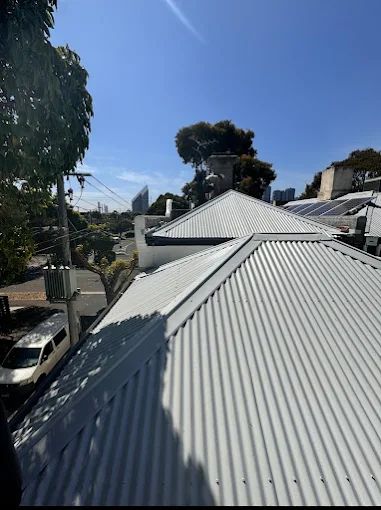
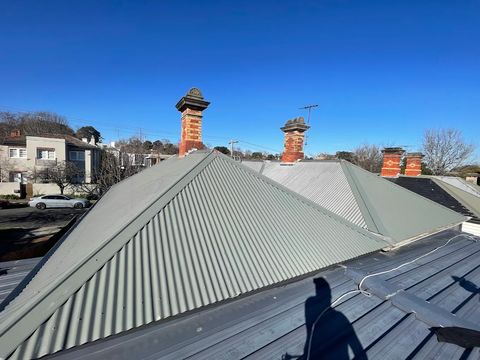
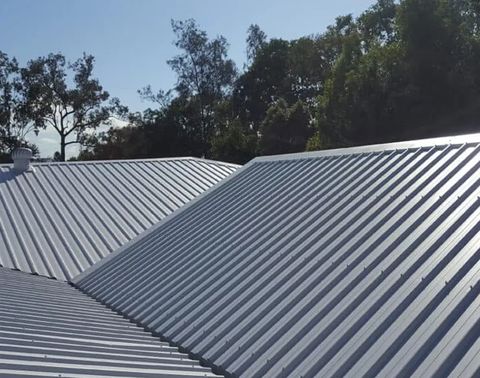
Leave it alone until it's been assessed
Don't cut, drill, sand, scrub, water-blast or walk on a roof that might be asbestos cement. ASSEA, the federal asbestos agency, says it's illegal in every state to use high-pressure water or compressed air on asbestos, and old asbestos roofs can be brittle enough that people have fallen through them. Keep children and pets off it. Don't clean out the gutters underneath either: ASSEA says debris in them should be treated as friable, the crumbly and more dangerous kind, and that run-off from these roofs shouldn't be used for drinking, washing or bathing.
Why it matters
Breathing asbestos fibres can cause lung cancer, mesothelioma and asbestosis, often 20 to 30 years after exposure. ASSEA says simply living under an asbestos roof isn't necessarily dangerous if it's sealed, undamaged and left alone.
The trouble is age. ASSEA says asbestos cement roofs are in the poorest condition of all the asbestos left in Australian homes, and they get more brittle over time. That's a good reason to plan removal rather than wait for the roof to fail.
Is your roof asbestos?
ASSEA says a home built or renovated before 1990 probably has some asbestos. Corrugated asbestos cement roofing was sold under names including Fibrolite and Super-Six, but non-asbestos sheets that look the same were still sold until at least 1992, so looks alone won't settle it.
Only a sample tested by a NATA-accredited laboratory can confirm asbestos. Our guide to whether your roof is asbestos and the asbestos checker help you work out how likely it is before you arrange a test.
What the law says about removing it
Across Australia, anyone you hire to remove more than 10 m2 of bonded asbestos needs an asbestos removal licence, and any whole roof is far bigger than that. Class B licences cover bonded asbestos such as cement sheeting; Class A covers all types, including friable asbestos. The ACT goes further: there, only a licensed removalist may remove any amount.
Victoria's Asbestos Hub points out that your builder, electrician or plumber generally isn't licensed to remove asbestos, and a roofing licence isn't an asbestos removal licence either. Some roofers who do asbestos re-roofs hold a removal licence themselves; others bring in a licensed removalist. Either way, ask to see the asbestos removal licence and check it with your state's regulator.
State by state: notice and paperwork
| Notice the removalist must give | What to ask for | |
|---|---|---|
| Victoria | WorkSafe, at least five days before for jobs over 10 m2 | A Waste Tracker record from whoever removes the waste |
| New South Wales | SafeWork NSW, before removing more than 10 m2 | A copy of the disposal receipt, because you stay responsible for lawful disposal |
| Queensland | Workplace Health and Safety Queensland, 5 days before | A copy of the licence, which WHSQ can verify by number |
| Western Australia | WorkSafe, at least 5 days before | A clearance certificate after the work, and a check on whether your council needs to approve the removal |
| South Australia | SafeWork SA, before work starts | Where the waste is going, since it must go to a licensed disposal site |
| ACT | WorkSafe ACT, in writing, at least five days before | A clearance certificate, which only a licensed asbestos assessor can issue |
How an asbestos re-roof runs
Test and plan
The roof is sampled and tested, the removalist plans how the sheets will come off and where the waste goes, and they give the regulator the notice your state requires.
Prepare the site
The work area is marked off, and you'll be told about closing windows, moving cars and keeping people and pets away on the day.
Remove the sheets whole
Sheets are kept damp and taken off without breaking them where possible, then wrapped in heavy plastic. Gutters underneath are treated as contaminated.
Lawful disposal
Asbestos waste can never go in household bins. It's wrapped and taken to a licensed asbestos waste facility, and ASSEA says a licensed removalist usually includes disposal in the price.
New roof
With the old roof gone, a roofer checks the battens and frame, then lays the new roof, usually steel because it's light. See roof replacement for that half of the job.
Questions to ask the removalist
- What's your asbestos removal licence number and class?
- Does your licence cover the gutter debris, which may need treating as friable?
- Is disposal at a licensed facility included, and will I get the paperwork?
- How will you handle the gutters, ridge capping and any fibro eaves?
- Is the new roof in the same quote, and who coordinates the two jobs?
Your part, and the licensed removalist's part
You can
- Keep everyone off the roof, and stop any cleaning, painting or repairs until it's tested
- Have a professional take the sample for testing, never break a piece off yourself
- Check the removalist's licence on your state's register
- Tell your neighbours when removal is booked
- Check your home insurance, which ASSEA warns may exclude asbestos
Leave to a roofer
- Sampling and testing
- Removing, wrapping and disposing of the sheets and gutter debris
- Any work on the roof surface at all
- Laying the new roof once removal is finished
If it were our roof
If it's sound and you're not renovating, we'd leave it alone and keep everyone off it. If it's cracked, brittle or due for replacement, we'd have it tested, then get quotes that cover licensed removal and the new roof together, with the removal licence number in writing. We'd never let anyone water-blast it, and we wouldn't pay for a patch-up on a roof in that state. You'd be spending on something that has to come off anyway.
Want a roofer to take a look?
Tell us the job and your postcode. We match it with a Find My Roofer certified roofer who specialises in that kind of work, and they call you to quote. Your number goes to them alone.