The words, in plain English
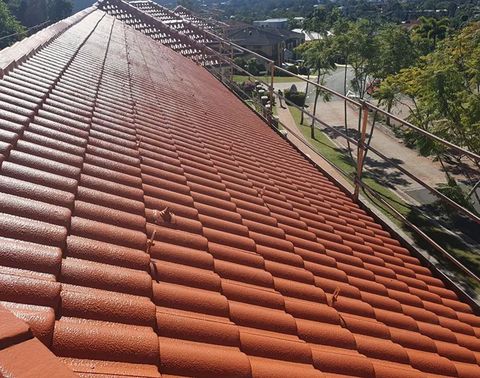
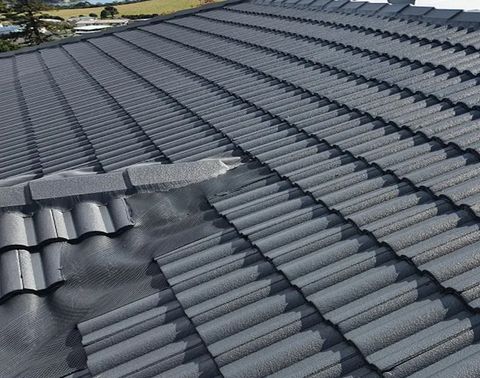
Ridge capping is the row of curved tiles along the peak of a tiled roof and down the hips, the sloping edges where two roof faces meet.
Bedding is the sand and cement mortar the caps sit in, holding them level over the tiles below. Pointing is the layer on top that seals the joint and finishes it neatly.
Monier, one of the big tile makers, says pointing can crack or loosen with the weather, and that repairs should use modern flexible compounds, which move with the roof.
Repoint only, or rebed and repoint?
| Repoint only | Rebed and repoint | |
|---|---|---|
| What's done | Old pointing cleaned back, new flexible pointing over sound bedding | Caps lifted, old bedding removed, caps relaid on fresh mortar, then pointed |
| When it's enough | Caps are firm and the bedding underneath is solid | Caps move, the bedding crumbles, or caps have shifted out of line |
| Typical trigger | Hairline cracks in the pointing | Mortar in the gutters, rocking caps, a leak near the ridge |
Signs your ridges need attention
From the ground, look for gaps between the caps and the tiles, caps sitting crooked, or a ridge line that looks wavy instead of straight. Binoculars help.
Crumbs of sandy mortar in the gutters, on paths or on the patio are a giveaway that bedding is breaking up. So is a ceiling stain that follows the line of the ridge or a hip. Monier lists cracked or broken ridge and hip bedding as a common cause of leaks.
Check again after strong winds. Loose caps can shift in a storm, and a cap that comes off lets water straight in. That's a job for emergency roof repairs.
How a roofer rebeds and repoints a ridge
Lift the caps
Each cap is lifted and stacked nearby. Cracked caps are set aside for replacement.
Clear the old mortar
Old bedding is chipped away and taken off the roof, not swept into the gutters.
Lay new bedding
Fresh mortar goes down along the ridge and hips, and the caps are set back in a straight, level line.
Point and fix
Flexible pointing goes over the bedding, tooled smooth, in a colour that matches the caps or the planned coating. The building code (NCC) requires ridge, hip and barge tiles to be held with galvanised nails, screws, purpose-made clips or flexible pointing complying with AS 2050, so ask how yours will be fixed.
Do the gable ends too
The tiles along the gable edges, called barge or verge tiles, are bedded and pointed the same way. They're often in just as bad shape as the ridge.
On its own, or as part of a restoration?
Rebedding and repointing is often done as a stand-alone job when the rest of the roof is fine. If you're planning a restoration within a few years, though, doing it all at once usually costs less, because you pay for access and safety setup once.
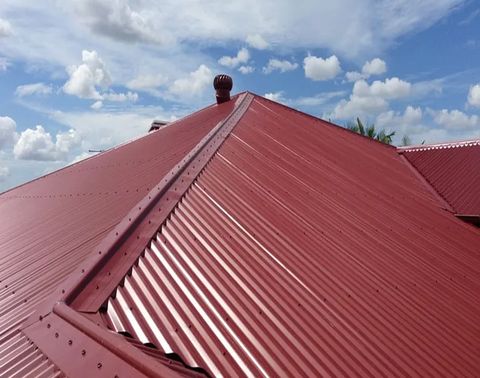
Metal roofs don't need this work. Their ridge capping is screwed down rather than set in mortar, so loose metal capping is a metal roof repair instead.
If it's only a handful of caps after a storm, a ridge capping repair may be all you need.
What the quote should list
- Metres of ridge and hip being done, and whether that's rebedding or repointing only
- Whether gable ends and barge tiles are included
- The pointing product by name, and its colour
- How the caps will be fixed, and how many cracked caps they've allowed to replace
- How the old mortar will be cleared from the roof and gutters
- The roofer's licence number and workmanship warranty
What you can do, and what's for the roofer
You can
- Check the ridge lines from the ground with binoculars
- Photograph the ridges after big storms, for comparison and any insurance claim
- Clear gutters only if you can reach them safely from a ladder
Leave to a roofer
- Lifting and relaying caps, which means working along the top of the roof
- Mixing and laying bedding, and applying pointing
- Replacing cracked caps and tiles
- Checking older roofs for asbestos cement before anything is disturbed
Our take
If the caps are firm and it's only cracked pointing, we'd repoint and keep the change. If you can see mortar in the gutters or caps out of line, we'd rebed and repoint the lot, gable ends included, rather than patching sections. Ask each roofer for before and after photos of the ridges, because most of the work is hard to judge from the ground.
Want a roofer to take a look?
Tell us the job and your postcode. We match it with a Find My Roofer certified roofer who specialises in that kind of work, and they call you to quote. Your number goes to them alone.
Getting a roofer out
Tell us what you're seeing and your postcode, and we'll pass your job to one licence-checked roofer who works in your area. They'll call to arrange a look and give you a written quote.
You're under no obligation to go ahead.