Where does flashing fail?
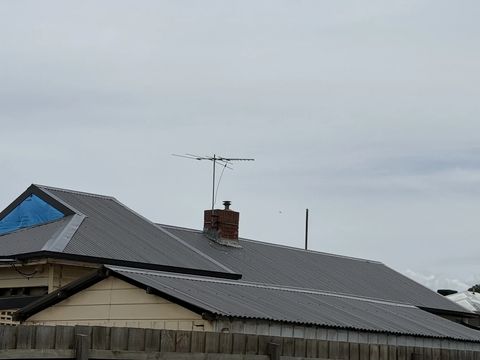
Chimneys. Older chimneys usually have lead or steel flashing tucked into a mortar joint. The mortar cracks, the flashing pulls out, and water runs down behind it into the roof.
Walls. Where a lower roof butts up against a two-storey wall or an extension, a strip of flashing turns up the wall and over the roofing. If it's too short, has lifted, or was only ever stuck on with silicone, wind-driven rain gets behind it.
Skylights, vents and solar mounts. Every hole through the roof needs flashing around it, and work added years after the roof went on is a regular source of leaks. On a low-pitched metal roof, BlueScope says anything that blocks the channels in the sheets needs a small gutter above it to send water around. See leaks after solar panels go in and skylight leaks.
Why do valleys leak?
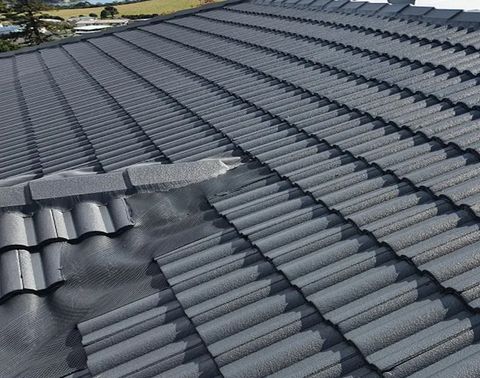
A valley takes the run-off from two slopes at once. On a tiled roof it's usually a metal channel called a valley iron, with tiles cut to sit along each side of it.
Leaves pile up, the channel overflows and water spills sideways under the tiles. Old galvanised valley irons rust through. Tiles cut too short, or cracked mortar along the valley edges, let water in from the side. Our guide on valley leaks goes into each cause.
Repair or replace?
Flashing. If the metal is sound and has just come away, a roofer can refix it and seal it properly. If it's rusted, split or the wrong shape, it gets replaced. On a chimney that usually means raking out the old mortar joint and tucking the new flashing in.
Valleys. A blocked valley just needs clearing. A rusted one gets replaced: the roofer lifts the tiles along both sides, lays a new valley iron, refits the tiles and seals the edges.
A tube of silicone is not a flashing repair. If a quote's answer to a leaking flashing is sealant and nothing else, ask how long they expect it to last. Good flashings shed water on their own: VELUX, for one, says its skylight flashings are designed not to rely on sealants that break down.
What to ask about flashing or valley work
- Are you refixing the old flashing or replacing it, and with what metal?
- Will it be mechanically fixed and tucked in, or only sealed?
- Is the valley being cleared, patched or fully replaced?
- How many tiles come off for the valley, and who pays if some break?
- What warranty comes with this repair?
Your part, and the roofer's
You can
- Watch the valleys from the yard in heavy rain and see whether water spills over the sides
- Look around the chimney and wall junctions, from the ground, for rust streaks or flashing that's pulled away
Leave to a roofer
- Clearing valleys, which are on the roof itself
- Refixing, replacing or re-tucking flashing
- Replacing valley irons
- Flashing around solar panels, which may need the solar installer as well
What we'd ask for
We'd ask the roofer for close-up photos and a plain answer: is this sound metal that's moved, or metal that's failed? Sound metal can be refixed. Failed metal should be replaced, not smeared with sealant. Monier suggests clearing gutters, downpipes and valleys at least once a year, and more often under trees. If yours keep clogging, ask about trimming branches or fitting gutter guards too, or you'll be paying for the same problem again next winter.
Want a roofer to take a look?
Tell us the job and your postcode. We match it with a Find My Roofer certified roofer who specialises in that kind of work, and they call you to quote. Your number goes to them alone.