What Colorbond is, and where other metal roofs fit
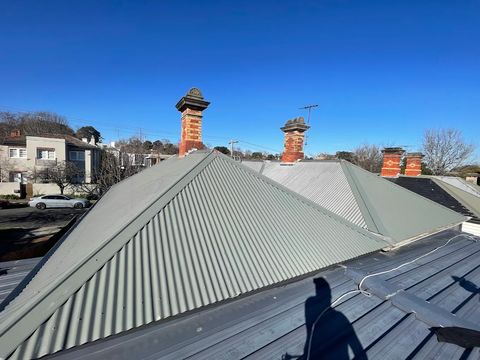
BlueScope describes Colorbond steel as five layers: a steel base, a metallic coating, a pretreatment, a primer and a baked-on topcoat. Its unpainted sibling, Zincalume, is steel with the metallic coating but no paint. Both are rolled into roofing by sheet makers, and BlueScope says to look for the Colorbond steel brand on the product or its packaging.
Metal roofing also covers zinc and standing seam systems, which sit at the premium end, and older galvanised iron. Colorbond is a BlueScope trademark. Find My Roofer is independent, has no connection with BlueScope, and passes jobs to local roofers who buy steel from whichever sheet maker they use.
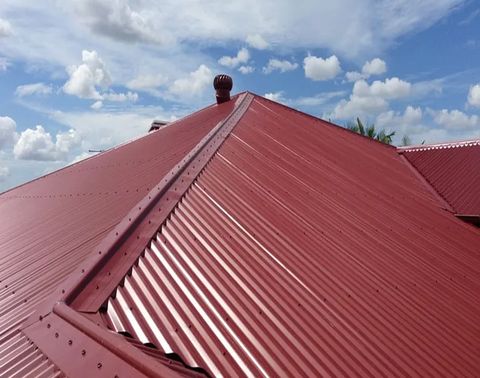
Corrugated or concealed-fix?
| Corrugated | Concealed-fix (such as Klip-lok) | |
|---|---|---|
| Look | The classic rippled Australian roof | Bold ribs with wide, flat pans |
| How it's fixed | Screwed through the crests of the sheet | Clipped underneath, so no screws pierce the sheet |
| Lowest pitch | Typically 5 degrees, per BlueScope | As low as 1 degree for some profiles |
| Where it suits | Most pitched houses, and curved verandahs in a curving-grade sheet | Low-pitched and near-flat roofs, extensions and skillions |
Near the coast? Your distance from the surf decides the steel
Salt spray eats steel, so BlueScope sets coastal rules by distance from breaking surf, measured from the high-water mark. Its homeowner guide recommends standard Colorbond more than 200 m from breaking surf, and Colorbond Ultra, with a heavier metallic coating, between 100 and 200 m. Within about 100 m it points to its Superdura Stainless product.
Sheltered water such as harbours and river estuaries is treated more gently than open surf, though BlueScope rates some big bays as exposed. Ultra comes in only 7 colours, so check the range before you fall for a colour. Gutters, fascia and flashings need the same care, and a roofer who works locally should raise this without being asked.
Colour, heat and the rules
Colour isn't only about looks. BlueScope says light-coloured roofs can run up to 35 degrees C cooler on the surface than dark ones in hot sun, and it publishes a solar absorptance figure for each colour (the share of the sun's heat a roof soaks up).
For new work in climate zones 1 to 5, the building code's simplest compliance path needs a roof solar absorptance of 0.64 or less, so a very dark roof can mean extra energy-rating work. Some estates and councils have their own colour rules too. Our Colorbond colours pages give each colour's figures, and the colour visualiser shows them on a house.
Looking after a steel roof
Rain keeps the open roof clean. The spots rain doesn't reach, like the underside of gutters and wall cladding under the eaves, should be hosed down at least every six months, or every three months near the coast, according to BlueScope's maintenance bulletin.
BlueScope also says painting over Colorbond or Zincalume voids its warranty, and it doesn't recommend touch-up paint. Copper-rich water from a hot water system overflow corrodes the steel, so overflow pipes should run beyond the roof, ideally to the ground. Lead flashings are a problem for the same reason.
What a good metal roofing quote names
- The sheet maker, the profile and the base metal thickness (BMT, the steel's thickness before coating)
- Standard Colorbond, Ultra or another grade, chosen for your distance from the coast
- The colour, and matching gutters, fascia and flashings
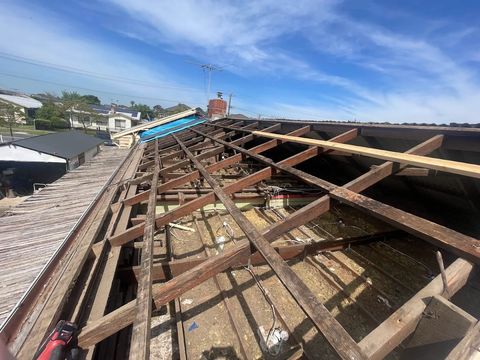
- The blanket or sarking going under the sheets
- Flashing materials, with no lead or copper touching the steel
- Who registers the BlueScope warranty, which homeowners can do online for up to 12 months after installation
- The roofer's licence number and workmanship warranty
What's safe for you, and what's for a roofer
You can
- Hose the unwashed areas under eaves and gutters on schedule
- Check from the ground that the hot water overflow doesn't drip onto the roof
- Register the warranty and keep the paperwork
- Look for rust streaks or lifted sheets from the yard after storms
Leave to a roofer
- Anything on the roof, where steel is slippery and easy to dent
- Cutting, fixing and replacing sheets
- Flashings, valleys, ridges and gutters
- Sealing, which needs a neutral-cure sealant made for coated steel
What we'd do
We'd sort the grade first: measure roughly how far you are from breaking surf, and if it's anywhere near the 200 m line, ask the roofer to price Ultra. Then we'd pick the profile for the pitch, and the colour last, from a real sheet sample outside. On any steel roof we'd insist on a foil-faced blanket underneath, because it's what makes the roof quiet and keeps condensation off the ceiling.
Want a roofer to take a look?
Tell us the job and your postcode. We match it with a Find My Roofer certified roofer who specialises in that kind of work, and they call you to quote. Your number goes to them alone.