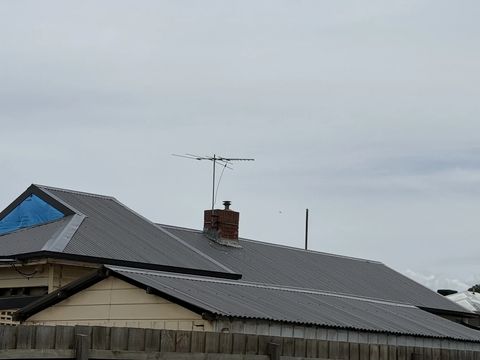
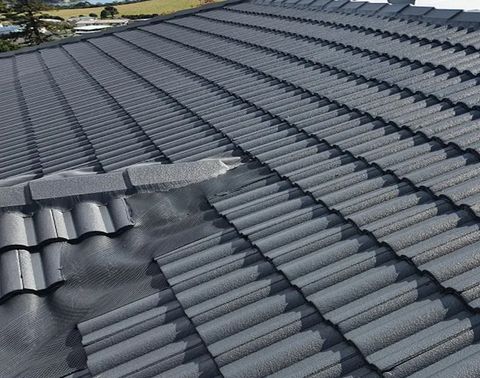
What actually goes wrong on a metal roof?
Screws. Each roofing screw has a rubber washer under its head. Years of sun and heat harden and crack that washer, and the sheets expanding and contracting can loosen the screw. Water then tracks in around the hole.
Laps. Where one sheet overlaps the next, or meets a flashing, sealant dries out and cracks. Wind can drive rain sideways through the gap.
Rust. It tends to start at cut edges, scratches, old screw holes and anywhere water sits. Metal filings left behind after cutting and drilling (roofers call them swarf) rust where they lie. BlueScope says swarf causes rust stains, can shorten a roof's life, and should be swept or hosed off at the end of each day.
Mixed metals. BlueScope warns that lead and copper corrode Colorbond and Zincalume steel. That includes run-off from old lead flashings, and copper-rich water from some hot water system overflows, which it says should be piped past the roof, ideally to the ground.
Knocks. Dents from hail or branches, and sheet edges lifted by strong wind.
How does a roofer fix each one?
Perished or loose screws get replaced, often with a slightly larger screw where the old hole has worn oversize. Dry laps are cleaned and resealed with a neutral-cure sealant. BlueScope says sealants that smell of vinegar or ammonia as they cure can corrode the coating.
Light surface rust can be treated and painted. Once rust has eaten through, the sheet or that length of it gets replaced, because a patch on thin, rusted metal rarely holds. New sheets go in matching the profile and colour.
Colorbond weathers, so a brand-new sheet in the same colour name can look a shade different at first. If that matters, ask for new sheets to go where they're least visible.
Check it's really metal
Grey corrugated roofing on an older house or shed isn't always steel. Corrugated asbestos cement, often called Super Six, was made in Australia before 1990 and can pass for metal from the ground. If you're not sure, don't let anyone drill, cut or walk on it until it's been checked. Water-blasting asbestos cement is illegal in every state. Our guide to Super Six roofing shows what to look for.
What you can handle, and what you can't
You can
- Look for rust streaks, lifted sheet edges or missing screw heads from the ground or a window
- Keep gutters clear so water doesn't pond against the bottom of the sheets
- Trim branches that scrape the roof in wind
- Ask any tradie who works up there to sweep off their drilling filings before they leave
Leave to a roofer
- Replacing roofing screws and washers
- Resealing laps and flashings
- Treating rust and swapping out sheets
- Anything that means walking on the sheets, which dent if stepped on in the wrong spot and turn slippery with dew or rain
Our take on metal repairs
If the trouble is in one area, we'd get that area fixed properly: new screws, resealed laps, and a replaced sheet if rust has gone through. If rust is showing up on sheet after sheet, also get a price to restore the metal roof or re-roof in Colorbond, so you can weigh years of patching against being done with it. Our guide on rusty roofs walks through that call.
Want a roofer to take a look?
Tell us the job and your postcode. We match it with a Find My Roofer certified roofer who specialises in that kind of work, and they call you to quote. Your number goes to them alone.