What does a roofer do on an emergency call?
First they decide whether it's safe to work at all. In lightning, high wind or driving rain, a roofer may hold off, or work only from a ladder at the gutter line until conditions ease.
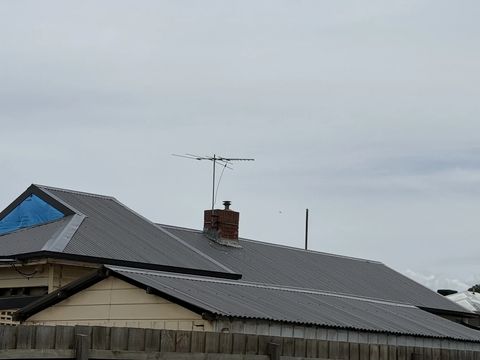
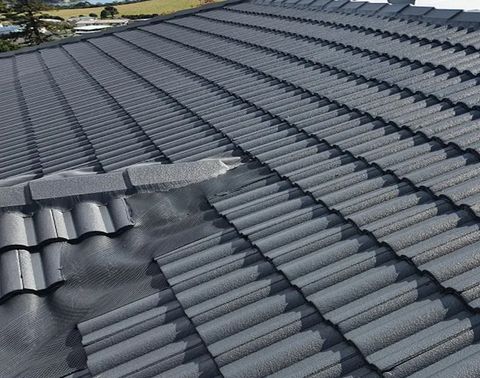
Then comes the temporary fix. That might be refitting a few dislodged tiles, putting back a sheet that's lifted, screwing down loose flashing, sealing an obvious gap, or covering the damaged section with a tarp.
Before leaving, a good roofer takes photos, tells you what they found and explains what the permanent repair is likely to involve. Your insurer will want the same information.
How should a roof tarp go on?
A tarp is a heavy waterproof sheet laid over the damaged area and carried up and over the ridge, so rain runs across the top of it rather than underneath.
It's held down with ropes, battens or weights rather than nails through good tiles or sheets, because every new hole is one more leak to fix later.
Think of it as a stopgap. Sun and wind wear it out, and it can work loose in the next blow, so book the permanent repair as soon as the weather settles. If you see it flapping, call the roofer back rather than trying to tie it down yourself.
Leave tarping to a roofer or the SES
Fitting a tarp means working on a wet, slippery roof, often in wind, holding a sheet that behaves like a sail. It's risky even for trained crews with harnesses. For storm damage that can't wait, ring the SES on 132 500. If someone is hurt or in danger, call 000.
What should you ask when you call?
- Can you come today, and if not, when's the earliest?
- What will you charge to make it safe, and is there an after-hours rate?
- Will you quote the temporary fix and the permanent repair separately?
- Will you photograph the damage before and after you cover it?
- Can you give me a written note of the cause that I can send my insurer?
How does insurance fit in?
Ring your insurer as early as you can. Some send their own make-safe crew, and some will only pay for work they've agreed to first, so ask before you book anyone for more than an urgent cover.
Keep every invoice and every photo. Hang on to broken tiles or damaged materials until the insurer says you can throw them out. Our guide to storm damage claims runs through what insurers usually ask for. Nobody, us included, can promise how a claim will go.
You, the roofer and the SES
You can
- Switch off power at the switchboard if water is anywhere near lights or power points
- Move valuables, put down buckets and photograph everything
- Tell the roofer what you can see from the yard, like a missing ridge cap or a lifted sheet
Leave to a roofer
- Tarps and temporary covers
- Refitting tiles, sheets and flashing that have shifted
- Any work on a wet or windy roof
- The permanent repair once things are dry
If the water's coming in now
Sort the power and the buckets, then book a roofer for a make-safe and ask them for photos. Don't sign up for a big repair in the panic of the night. Once the roof is covered and dry, you've got time to get the proper repair quoted and checked with your insurer.
Want a roofer to take a look?
Tell us the job and your postcode. We match it with a Find My Roofer certified roofer who specialises in that kind of work, and they call you to quote. Your number goes to them alone.