Bedding and pointing, in plain English
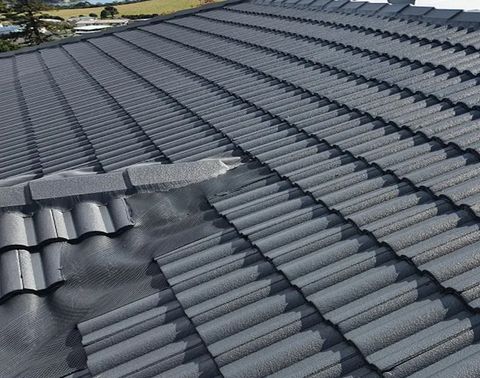
There are two layers. Bedding is the mortar laid along the ridge that the caps sit in. Pointing is the thin finishing coat over the bedding that seals the edges and gives that neat line you see from the street.
Older roofs were pointed with sand and cement, which turns brittle and cracks as the roof moves. Monier, a major tile maker, says pointing cracks and loosens with weather and that repairs should use modern flexible compounds, which give a little rather than cracking.
So repointing means redoing that top coat, and rebedding means lifting the caps and laying fresh mortar underneath. Our rebedding and repointing page covers the whole-roof version of the job.
Signs your ridge capping needs attention
- Cracks or gaps in the pointing, visible from the street
- Crumbs of mortar in the gutters or on paths below the roof
- Caps that look crooked, raised or out of line with their neighbours
- A cap missing after a windy night
- Moss or weeds growing out of the ridge line
- Water marks on a ceiling directly under a ridge or hip
Fix a section, or the whole ridge?
If a short run has let go, say after a storm or where someone walked along it, a roofer can lift just those caps, rebed and repoint them, and leave the rest alone.
For new roofs, the National Construction Code says ridge and hip caps must be held with nails, screws, purpose-made clips or flexible pointing that meets the tile standard, AS 2050. It's a fair benchmark for a repair too, so ask the roofer how they'll fix yours.
If cracking runs along every ridge and hip, patching one section now and another next year means paying for setup and access over and over. Doing it all at once costs more on the day but often less overall.
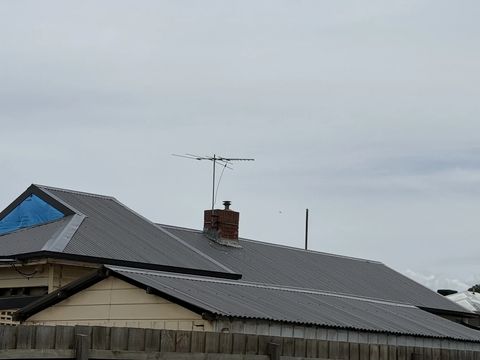
On a metal roof, the capping is a folded steel cover screwed down over the join. Problems there are loose screws, dried-out seals and rust, much like other metal roof repairs.
What you can check, and what you can't
You can
- Look along the ridge lines from across the road, with binoculars if you've got them
- Notice grey or coloured crumbs in the gutter, on the driveway or on window sills
- Photograph any section that looks out of line so you can compare after the next storm
Leave to a roofer
- Lifting, rebedding and repointing caps
- Replacing cracked caps, which may need matching from reclaimed stock
- Checking the tiles alongside the ridge, which get disturbed when caps come up
- Any work along the peak, the highest and most exposed part of the roof
Our take
If one section has shifted and the rest is sound, we'd have just that section fixed and ask for photos of the remaining ridge while the roofer is up there. If the pointing is cracked everywhere, we'd skip the patch and price the whole ridge, ideally with flexible pointing. And if the roof looks tired generally, ask whether a restoration makes more sense, since rebedding is part of that job anyway.
Want a roofer to take a look?
Tell us the job and your postcode. We match it with a Find My Roofer certified roofer who specialises in that kind of work, and they call you to quote. Your number goes to them alone.